
Viva Venezuela
There are places fishermen talk about the way old sailors talk about wind, half fact, half faith. You don’t hear them brag so much as remember. Voices drop. Sentences slow down. Eyes wander off past the rail, somewhere between the horizon and whatever memory still hasn’t let go.
Venezuela was one of those places.
But like most legends, it didn’t start out legendary. It started with one man willing to keep going when common sense said turn around.
In 1983, Ron Hamlin pushed farther south after a St. Thomas trip, chasing nothing more than a hunch and the edge of the chart. Ronnie was a rare breed. Always chasing the horizon. He liked to say the only record that can’t be broken is being first at something. And he lived that way.
He brought a boat to Venezuela when almost nobody else had even considered it.
“Ronnie Hamlin was the first American to bring a boat down there,” Bubba Carter would later say. “He was really the one who started all the hubbub.”
Word travels fast in fishing circles when it has teeth. Venezuela didn’t announce itself with fanfare. It leaked out quietly. One bite report. One absurd day. One dockside story that sounded just believable enough to make you wonder.
I was fortunate enough to go there with my father for the first time in September of ’85. We didn’t go chasing records or glory. We went because we heard the fishing was good, and because, unbelievably, it was cheaper than running to the Hudson Canyon for the weekend.
Including airfare.
That alone should tell you something about the time.
What we found wasn’t just good fishing. It was a recalibration. The kind of place that resets your internal compass for what “possible” looks like offshore. Blue marlin that didn’t behave the way they were supposed to. White marlin in numbers that bordered on irresponsible. Sailfish showing up just to round things out, like they didn’t want to be left out of the story.
And all of it happened close enough to shore that the mountains stayed with you all day. Looming, green, indifferent. A reminder that you were somewhere different.
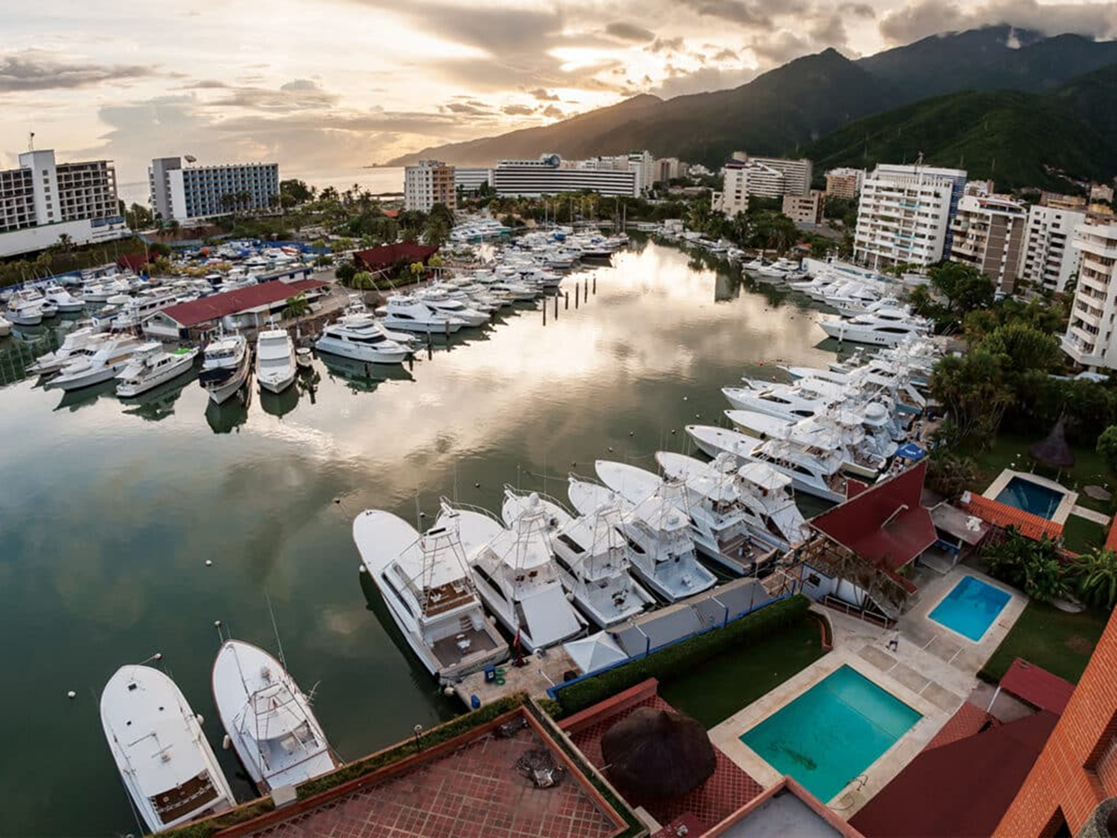
Soon, Venezuela stopped being a rumor and started becoming a pilgrimage.
For a brief, incandescent stretch of time, the water off Venezuela wasn’t just good. It was impossible. The kind of fishing that ruins you forever. The kind you stop measuring because numbers stop meaning anything.
Thirty white marlin bites in a day. Blue marlin crashing the spread like they were late for something. Grand slams so common they became background noise. Fantasy slams that happened not because someone planned them, but because the ocean simply allowed it.
If you were there, you know.
If you weren’t, you probably don’t believe us.
And that’s fine.
Because Venezuela wasn’t just about the fish. It was about the way the place stripped things down. Boats tied stern to at marinas beneath towering hills. Crews sharing meals, tools, stories. Helping each other because there was more than enough fishing to go around.
Competition existed, sure. But it was friendly. You wanted to beat your buddy by one fish, but you still wanted him to get tight. Nobody hoarded numbers. Nobody guarded secrets. Venezuela made everyone generous.
The local fishermen were some of the best anywhere. Kids washed boats. Men ran errands. Families became part of the rhythm. One boy hid in a fish box just to get offshore once. Today, he’s still in the industry, still chasing that same fever.
That’s what Venezuela did to you. It infected you.
Days blurred together. You’d hook doubles on light tackle and tie a poly ball to one rod just to manage the chaos. Sometimes you’d come back hours later and the fish would still be there, still waiting, like it understood the system.
At night, after the flags were run up the rigging, the stories got louder. Polar beer. Rum. Laughter spilling off docks and out of restaurants until the morning threatened to arrive again too soon.
And then, quietly at first, it started to slip away.
Mudslides came. Politics hardened. Scarcity followed. Boats left one by one, not because the fishing failed, but because the world around it did. Assets became liabilities. Logistics became impossible. What had once felt welcoming became uncertain.
The mountains are still there.
The banks still hold bait.
The fish, by all accounts, never left.
But the era did.
That’s the part that still sits heavy. Not just losing a fishery, but losing a place in time. When things were raw and shared. When a marina could feel like home. When the ocean felt generous beyond reason.
And now, suddenly, Venezuela is being whispered about again.
Not as memory this time, but as possibility.
Scroll a screen or walk a dock and you’ll hear it. Rumors. Headlines. Conflicting reports. Talk of pressure campaigns, oil, sanctions, power shifting hands. Names like Nicolás Maduro and Donald Trump tied up in stories that seem to change by the hour.
Some say everything has changed.
Some say nothing has.
Most admit they don’t really know yet.
What is clear, even through the noise, is that Venezuela has once again become a geopolitical pressure point. A petrostate with the world’s largest oil reserves. A country that was once among the wealthiest per capita on Earth, then collapsed under corruption, mismanagement, and authoritarian rule. A place where millions left because staying became impossible.
And whenever politics churn like that, fishermen start listening.
Because we’ve learned something over the years. When people leave, fish don’t. When pressure lifts, even a little, nature responds faster than governments ever do.
So the questions start circulating again.
Is it opening?
Is it safe?
Is the fishing still there?
The answer to the last question has always been yes.
Those banks don’t care who sits in a palace or what flag flies over an oil terminal. Bait still stacks on structure. Currents still collide. Marlin still do what marlin have always done when left alone long enough.
But history teaches another lesson too.
Places like Venezuela don’t just reopen. They exhale. Slowly. Unevenly. And never without consequence.
That’s why the talk feels different this time. Less bravado. More caution. Less about being first. More about being right.
When I think about Venezuela now, I don’t think first about the numbers or the slams or the stories that got louder every time they were told. I think about being there in ’85 with my father, watching him take it all in without saying much.
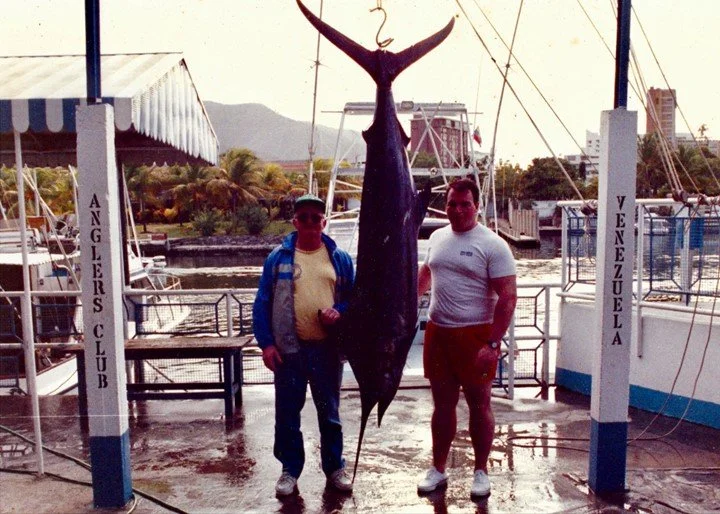
I didn’t know then that we were standing inside something that wouldn’t last. None of us did.
Maybe that’s why it still feels unfinished. Not because the fishing ended, but because time kept moving, and we didn’t know what we were supposed to hold onto.
Anyone who lived the first era understands something important. You don’t rush back into a place that once gave you everything.
You listen.
You watch.
And you remember how rare it was the first time.
Venezuela doesn’t need to become a destination again to remain what it is. It already earned its place. In the stories we tell. In the benchmarks we measure everything else against. In the long silences when someone asks, What was the best fishing you ever saw?
There are answers you give.
And then there’s Venezuela.
Viva Venezuela.
Once was enough.
But God, what a once it was.
