
The Chase Doesn’t Change
Every generation offshore believes it’s fishing a different game.
The boats are faster. The electronics are smarter. The information arrives earlier, cleaner, and in greater volume than it ever did before. Screens glow where men once squinted. Charts update where instincts used to argue. Weather stretches days ahead instead of hours.
On paper, it looks like progress solved the problem. And early in the day, it feels that way.
You idle out of the inlet knowing more than the men who ran before you ever did. You know the surface temperature breaks. You know the chlorophyll edges. You know what the satellites saw last night and what the models think the wind will do tomorrow. You know where someone else raised fish yesterday afternoon, and you know it before your first cup of coffee cools.
That knowledge creates a calm confidence. Not arrogance. Just readiness.
It isn’t false. It’s just temporary.
Because offshore has always allowed men to believe they’re ahead of it. Right up until the moment they aren’t.
Every generation mistakes better tools for a changed test. Wood gave way to glass. Glass gave way to infusion. Paper charts gave way to screens. Birds gave way to sonar. Guesswork gave way to data.
None of it altered the part that actually matters.
The ocean still compresses decisions. It still shortens timelines. It still exposes hesitation. Technology didn’t change the chase. It softened the opening.
The hard part always comes later. It comes when information conflicts. When reports don’t line up. When the plan built on land begins to loosen offshore.
That’s when the day stops feeling managed and starts feeling owned.
Because the chase was never about knowing more. It was about deciding when knowing stops helping. And that part has never changed.
It usually happens farther out than you planned.
You’re a hundred miles from the dock when the first call comes in. Someone you trust. They’re raising fish twelve miles south. Clean bites. Good signs.
A few minutes later, another call. Same credibility. Different direction. Fifteen miles north. Same promise.
You don’t feel the pressure at first. Not like panic. Not like fear. It arrives the way weather arrives offshore, quietly, in small changes you would miss if you weren’t paying attention.
The boat is running clean. The engines have that steady, confident note. The horizon looks wide and empty, as if the ocean is generous today and there is room for every plan you brought with you. The crew is moving with purpose but not urgency. Coffee cups. Sunglasses. A few small jokes that still belong to land.
Then you look at the clock again.
Then the plotter.
Then the fuel number that always looks larger at the dock than it does a hundred miles out.
Twelve miles south is not far. Fifteen miles north is not far. Not in conversation. Not in a man’s mouth. But offshore, miles are time, and time is tide, and tide is opportunity. You cannot spend the day twice.
You can almost feel the boat waiting for you to declare what kind of day it will become. A day of commitment, or a day of chasing other men’s news until the sun slides down and the ocean closes the window.
This is the part nobody puts in brochures. The part no screen can soften. When two good options show up at the same time, and you are forced to choose one future and abandon the other.
That is when the chase becomes real.
You look at the plotter. You look at the fuel. You look at the clock.
You cannot fish both.
The distances are too far apart. The day is too short. Whatever you choose, you are committing to it. Whatever you don’t choose, you are leaving behind.
This is the moment no screen solves.
The data is solid. The reports are real. The boat is capable. The crew is ready. And none of it tells you which way to turn.
You can zoom out. Overlay. Scroll history. Convince yourself that one option is smarter or safer. But offshore, smart is often just another word for hopeful.
At some point offshore, electronics stop helping.
Surface temperature charts stop answering the only question that matters. Chlorophyll edges stop explaining why one bite holds and another fades. Satellite shots stop predicting what happens next.
The screens are still lit. The information is still there. It just stops resolving.
This decision has always existed. Different tools. Same moment.
You are not being asked to find fish. You are being asked to choose.
You make the call. The bow swings. The throttles come up. The ocean watches.
From that point forward, everything that happens belongs to you.
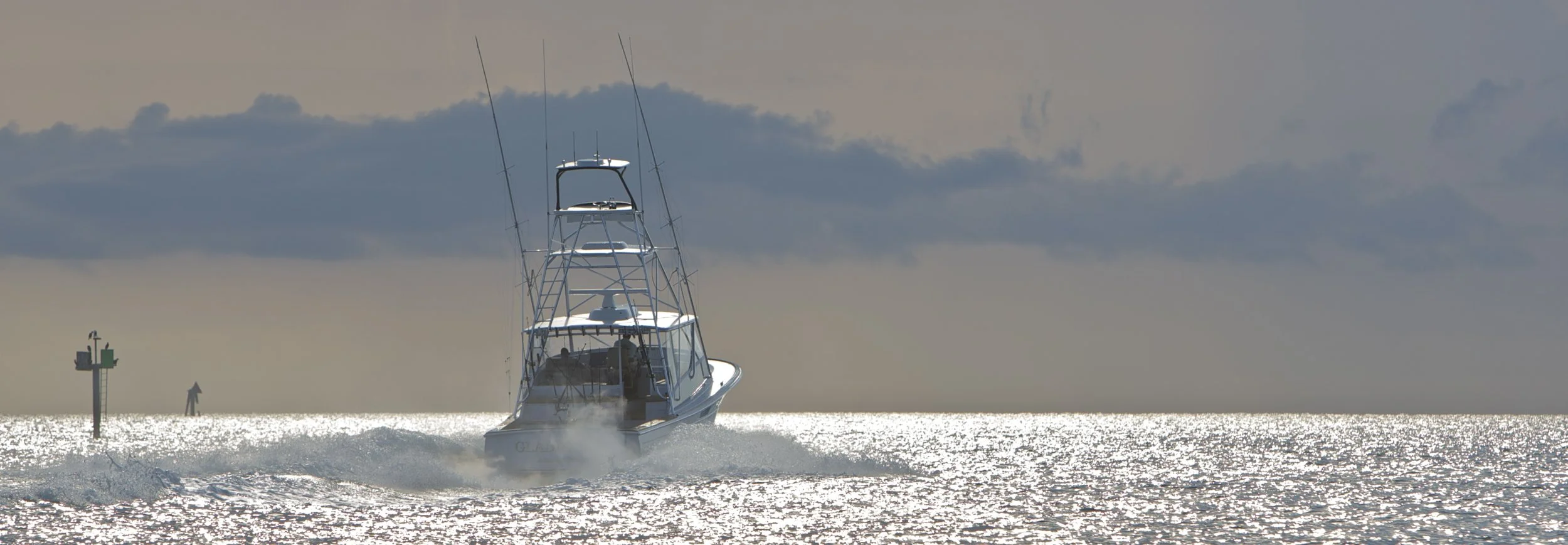
This is where the game reveals itself. Not in the planning. Not in the gear. Not in the run out. It reveals itself when preparation runs out of answers.
Most of us grew up believing we were smarter than our parents. We had more information. Faster access. New ideas. For a while, that felt like superiority.
Time corrected that. Experience taught us our parents weren’t ignorant. They were calibrated. What we mistook for outdated thinking was judgment earned the hard way.
Technology creates the same illusion offshore. There is an old saying offshore that refuses to go away.
Never leave fish to find fish.
Every captain hears it early. Most ignore it at least once.
Because mastery has a way of whispering to you. It tells you that what you’re seeing now is only part of the picture. That there is something better just beyond the edge of the screen. A cleaner temperature break. A prettier color change. A report that sounds more convincing than the fish already in front of you.
Early on, it feels smart to chase perfection. To believe that more information must lead to a better decision. You convince yourself that movement is progress, that action is control.
Then you learn the hard version of the lesson.
You leave fish that were willing. You run toward an idea instead of a reality. You trade something alive and imperfect for something theoretical and clean.
By the time you realize what you’ve done, the ocean has already moved on.
That’s when the phrase stops sounding old-fashioned and starts sounding precise. Not a superstition. A warning. A reminder that judgment is not about finding the best option on paper.
It’s about recognizing when the moment has already arrived.
For a while, that feels like mastery.
It isn’t. It’s adolescence.
The ocean doesn’t respond to cleverness. A marlin doesn’t care how many screens are glowing on the bridge. Fish don’t cooperate because we outthought them.
What replaces that early confidence isn’t cynicism. It’s respect.
Judgment is the currency here. Always has been.
This is where boats get misunderstood. A good boat doesn’t remove consequence. It clarifies it. She amplifies judgment. She does not replace it.
Range doesn’t matter until you choose where to spend it. Speed doesn’t matter until you decide when to use it. Comfort doesn’t matter until you decide whether to push or wait.
A good boat doesn’t force the wrong decision when time runs out. She buys margin. She buys clarity. She buys time. What she never buys is certainty.
A boat built with respect for offshore reality doesn’t promise to win the day. She promises not to lie to you when it matters.
There is another truth the chase insists on teaching. You can do everything right and still be refused.
You see it clearly on a trout stream.
A big brown trout holds in a deep pool, rising steadily to a light hatch of midges. He is not feeding recklessly. He is feeding with purpose. Every rise is measured. Every movement costs him something.
You take your time. You study the current. You pick the right fly. You wade into position carefully, slow enough not to push a wake ahead of you. The cast lands where you want it. You mend the line. You give the fly the best drift you know how to give.
The trout lifts. He tracks it. He comes up just far enough that you know he sees it.
Then he turns away.
You make the cast again. Same line. Same drift. Same patience. The fly passes clean. The trout rises. He looks. He refuses.
After a while, you stop changing things. You stop believing that one more adjustment will persuade him. You stand there and accept what is happening.
The trout is not confused. He is not impressed. He is simply deciding.
That is when it settles in.
You can do everything right and still not be chosen.
The decision was never yours.
Offshore is no different. You earn the right to be there. You do not earn the outcome.
Fish still decide when they eat. Weather still decides when it turns. The ocean still decides what she gives and what she keeps.
This is not failure. It is reality asserting itself.
The men who last are not the ones chasing certainty. They are the ones who live comfortably inside uncertainty.
They don’t explain decisions. They don’t narrate outcomes. They don’t assign blame when the day refuses them.
They accept the agreement. You made the best call you could. The ocean answered how she wanted.
That acceptance binds crews tighter than success ever could. It shows in quiet resets. In steady hands. In eyes forward on the long run home.
Strip away the noise and the chase looks the same as it always has. The boats are better. The tools are sharper. The fishermen are better prepared.
Offshore, the game has never changed. Judgment earns you the right to be there. It does not guarantee the result.
The ocean does not change because we ask it to. Fish do not cooperate because we executed perfectly.
And that is exactly why the chase endures.
Because when a man stands at the rail, knowing he did everything he could and is willing to accept whatever comes next, he is standing in the same place men have stood for generations.
Different boats. Different tools. Same moment.
The chase does not change. It reveals.
